Translate

Showing posts with label Cancer. Show all posts

Jun 20, 2016

INTENSIVE LIFESTYLE CHANGES MAY AFFECT THE PROGRESSION OF PROSTATE CANCER


Purpose: Men with prostate cancer are often advised to make changes in diet and lifestyle, although the impact of these changes has not been well documented. Therefore, we evaluated the effects of comprehensive lifestyle changes on prostate specific antigen (PSA), treatment trends and serum stimulated LNCaP cell growth in men with early, biopsy proven prostate cancer after 1 year. 

Materials and Methods: Patient recruitment was limited to men who had chosen not to undergo any conventional treatment, which provided an unusual opportunity to have a nonintervention randomized control group to avoid the confounding effects of interventions such as radiation, surgery or androgen deprivation therapy. A total of 93 volunteers with serum PSA 4 to 10 ng/ml and cancer Gleason scores less than 7 were randomly assigned to an experimental group that was asked to make comprehensive lifestyle changes or to a usual care control group.

Results: None of the experimental group patients but 6 control patients underwent conventional treatment due to an increase in PSA and/or progression of disease on magnetic resonance imaging. PSA decreased 4% in the experimental group but increased 6% in the control group (p  0.016). The growth of LNCaP prostate cancer cells (American Type Culture Collection, Manassas, Virginia) was inhibited almost 8 times more by serum from the experimental than from the control group (70% vs 9%, p 0.001). Changes in serum PSA and also in LNCaP cell growth were significantly associated with the degree of change in diet and lifestyle.

Conclusions: Intensive lifestyle changes may affect the progression of early, low grade prostate cancer in men. Further studies and longer term followup are warranted. Although this decision was made for reasons unrelated to this study, the choice to perform watchful waiting was clinically reasonable in these men. This subgroup of patients provided an unusual opportunity to have a nonintervention randomized control group to avoid the confounding effects of interventions such as radiation, surgery or androgen deprivation therapy. MATERIALS AND METHODS Patients in this study had biopsy documented prostate cancer with Gleason less than 7, serum PSA 4 to 10 ng/ml, and stages T1 and T2 disease. They had elected not to undergo conventional treatment. Patients were excluded if they had active prostatitis, had already made comprehensive lifestyle changes, had other life threatening comorbidities or major psychiatric disturbances, or were abusing alcohol, nicotine or other drugs. The University of California-San Francisco Committee on Human Research institutional review board approved this study and all patients provided proper consent. A randomized consent design was chosen to decrease the likelihood that control group patients might make diet and lifestyle changes comparable to those of the experimental group that could dilute between group differences and increase the likelihood of a type 2 error by decreasing the amount of information about the lifestyle intervention available to the control group. 

8 Of the 181 patients who were eligible for the study 93 enrolled, including 44 in the experimental group and 49 in the control group. Reasons for refusal to participate were unwillingness to make or not make comprehensive lifestyle changes and/or refusal to undergo periodic testing. An additional 15 patients with Gleason scores of 7 or greater were excluded because it is a unique prognostic category with biologically distinct and more aggressive neoplasms. Three experimental group patients withdrew soon after beginning the intervention because they said it was too difficult to follow and they refused further testing. No other patients were lost to followup. 

Experimental group patients were prescribed an intensive lifestyle program that included a vegan diet supplemented with soy (1 daily serving of tofu plus 58 gm of a fortified soy protein powdered beverage), fish oil (3 gm daily), vitamin E (400 IU daily), selenium (200 mcg daily) and vitamin C (2 gm daily), moderate aerobic exercise (walking 30 minutes 6 days weekly), stress management techniques (gentle yoga based stretching, breathing, meditation, imagery and progressive relaxation for a total of 60 minutes daily) and participation in a 1-hour support group once weekly to enhance adherence to the intervention. 
The diet was predominantly fruits, vegetables, whole grains (complex carbohydrates), legumes and soy products, low in simple carbohydrates and with approximately 10% of calories from fat. The diet is intensive but palatable and practical. In earlier studies most patients were able to adhere to this diet for at least 5 years.

A registered dietitian was available for nutrition education and counseling. A nurse case manager contacted patients by telephone once weekly for the first 3 months and once monthly thereafter. Control group patients were asked to follow the advice of their physicians regarding lifestyle changes. All therapeutic decisions, including whether to undergo conventional treatment during the study course, were deferred to the personal physician of each patient. Serum PSA was measured twice at baseline and at 1 year. 

Patients were counseled to avoid activities that might affect PSA for 3 days prior to testing, including sexual activity, exercise and digital rectal examination. Serum PSA was measured at Memorial Sloan-Kettering Cancer Center prospectively by a heterogeneous sandwich magnetic separation assay with the Immuno 1™ System. Testosterone was measured by a competitive immunoassay with an Immulite® automated analyzer. 

LNCaP cells were grown in 75 cm2 flasks in RPMI-1640 medium without phenol red, as previously described in detail.12 Cells were collected using 0.25% Trypsin-ethylenediaminetetraacetic acid (Sigma Chemical Co., St. Louis, Missouri) and then experiments were performed in duplicate (5 103 cells per well in 96-well plates). After 24 hours fresh medium composed of 10% fetal bovine serum (FBS) or 10% human serum was replaced and the cells were incubated (37C, 5% CO2) for 48 hours. FBS served as a control for each assay and results are expressed as percent FBS. Cell growth was assessed by MTS Assay (Promega, Madison, Wisconsin). For apoptosis cells were plated at a density of 1 104 cells per well in 96-well culture plates and incubated as described for the growth assay. After 48 hours apoptosis was detected by Cell Death Detection ELISAPLUS (Roche Applied Science, Indianapolis, Indiana). CRP determinations were done in duplicate by ultrasensitive enzyme-linked immunosorbent assay with 1.6 ng/ml sensitivity, and with intra-assay and interassay coefficients of variation of 3.9% and 5.1%, respectively. 

Dietary intake assessing the percent of calories from fat and mg cholesterol was measured with a semiquantitative food frequency questionnaire. Nutrient assessment was calculated elsewhere using United States Department of Agriculture food composition tables and other sources. The frequency and duration of exercise and of stress management techniques were assessed by self-reporting questionnaires. Attendance at group support sessions was recorded. The level of adherence to the recommended lifestyle change was based on a formula validated in previous studies.

A total score of 1 indicated 100% adherence to the program and 0 indicated no adherence. Eligible patients were randomly assigned to the control or the intervention group. Assessment of outcome measures were done while blinded to group assignment. Baseline equivalence of the 2 groups were analyzed using the independent sample t test in the case of continuous variables and the chi-square test of association in the case of categorical variables. 

Between group differences in baseline to 12-month changes in clinical and behavioral outcomes were compared using ANCOVA with baseline values as covariates. Although control patients were not asked to make changes in diet and lifestyle, some did so in varying degrees, that is 18% to 137% (experimental group 58% to 316%). As a secondary analysis, we correlated the degree of lifestyle change with changes in serum PSA, LNCaP cell growth, LNCaP apoptosis, serum testosterone and CRP across the 2 groups regardless of group assignment with baseline values as a covariate. Natural log transformation achieved normality (ln-CRP). 

All reported significance levels are 2-sided and p 0.05 was considered the required value for concluding tAt baseline there were no significant differences between the groups in demographic or clinical measures (table 1). Subject age, PSA and Gleason scores in those who were randomized into the study but refused to participate were not significantly different from values in those who participated. After 1 year adherence to the intervention was 95% in the experimental group and 45% in the control group. There were no adverse events attributable to the lifestyle intervention. Diet, exercise, stress management techniques and group support improved significantly more in the experimental group than in the control group (table 2). 
Six control group patients withdrew before 12 months and underwent conventional treatment, including radical prostatectomy in 3, and androgen deprivation, external beam radiation and brachytherapy in 1 each. Four of these patients underwent conventional treatment due to an increase in PSA during the study and 2 underwent it due to progression of prostate cancer, as assessed by magnetic resonance imaging compared with earlier studies. 

In contrast, no experimental group patients underwent conventional treatment during the study. Changes in serum PSA and LNCaP cell growth from baseline to 12 months were significantly different between the groups, showing more favorable changes in the experimental group. 
Specifically serum PSA decreased an average of 0.25 ng/ml or 4% of the baseline average in the experimental group but it showed an average increase of 0.38 ng/ml or 6% of the baseline average in the control group (F  5.6, p  0.016, fig. 1). Serum from experimental group patients inhibited LNCaP cell growth by 70%, whereas serum from control group patients inhibited growth by only 9% (p 0.001, fig. 2). CRP decreased more in the experimental group (p  0.07). There were no significant differences between the groups in serum testosterone or in apoptosis (table 3). Pearson correlations between changes in serum PSA, LNCaP, apoptosis, testosterone and CRP, and following recommended lifestyle changes in the entire sample indicated that the extent to which participants made changes in diet and lifestyle was significantly related to decreases in PSA (r  0.23, p  0.035, fig. 3) and to LNCaP cell growth (r 0.37, p 0.001, fig. 4).

Key words: prostate, prostatic neoplasms, prostate-specific antigen, life style, nutrition Increasing evidence from epidemiological and laboratory studies suggests that diet and lifestyle may have a role in the development of prostate cancer.1–5 The intake of total and specific vegetables, tomato products (lycopene), vitamin E, selenium, vitamin C and soy products has been inversely associated with prostate cancer risk. In addition, epidemiological evidence and migrant studies indicate that the incidence of clinically significant prostate cancer is much lower in parts of the world where people eat a predominantly low fat, plant based diet.6 There is considerable interest in the role of diet and lifestyle changes as complementary therapy in those with prostate cancer, especially because no consensus exists regarding the relative benefits and risks of conventional treatments in many patients. Many men are making changes in diet and lifestyle in the hope of preventing or slowing the progression of prostate cancer without the benefit of data from randomized, controlled trials to help guide these decisions. We examined if comprehensive changes in diet and lifestyle may affect the progression of prostate cancer, as measured by serial prostate specific antigen (PSA), treatment trends and serum stimulated LNCaP cell growth, in men with early, biopsy proven prostate cancer. To assess possible mechanisms mediating the relationship between changes in lifestyle and these measures we also evaluated changes in testosterone and C-reactive protein (CRP). Patient recruitment was limited to men who had chosen not to undergo any conventional treatment and who had low risk prostate cancer, as defined by baseline serum PSA and Gleason score. Submitted for publication September 9, 2004. Study received University of California-San Francisco Committee on Human Research institutional review board approval. Supported by Department of Defense Uniformed Services University Grant MDA905–99 –1– 0003 via the Henry M. Jackson Foundation Grant 600 – 06971000 –236, The Prostate Cancer Foundation, National Institutes of Health 5P50CA089520 – 02 University of California-San Francisco Prostate Cancer Specialized Program of Research Excellence, Bucksbaum Family Foundation, Ellison Foundation, Fisher Foundation, Gallin Foundation, Highmark, Inc., Koch Foundation, Resnick Foundation, Safeway Foundation, Wachner Foundation, Walton Family Foundation and Wynn Foundation. Foundation, Walton Family Foundation and Wynn Foundation. No supporting agencies were involved in the design or conduct of the study, in the collection, analysis or interpretation of the data, or in the preparation, review or approval of the manuscript. *
Correspondence: Preventive Medicine Research Institute, University of California-San Francisco, 900 Bridgeway, Sausalito, California 94965 (e-mail: d.ornish@pmri.org). † Financial interest and/or other relationship with Random House and Harper-Collins. ‡ Financial interest and/or other relationship with TAP Pharmaceutical Products, AstraZeneca, Pfizer and National Institutes of Health. 0022-5347/05/1743-1065/0 Vol. 174, 1065–1070, September 2005 THE JOURNAL OF UROLOGY® Printed in U.S.A. Copyright © 2005 by AMERICAN UROLOGICAL ASSOCIATION DOI: 10.1097/01.ju.0000169487.49018.73 1065
DEAN ORNISH, GERDI WEIDNER, WILLIAM R. FAIR, RUTH MARLIN, ELAINE B. PETTENGILL, CAREN J. RAISIN, STACEY DUNN-EMKE, LILA CRUTCHFIELD, F. NICHOLAS JACOBS, R. JAMES BARNARD, WILLIAM J. ARONSON, PATRICIA MCCORMAC, DAMIEN J. MCKNIGHT, JORDAN D. FEIN, ANN M. DNISTRIAN, JEANMAIRE WEINSTEIN, TUNG H. NGO, NANCY R. MENDELL AND PETER R. CARROLL‡ From the Departments of Urology (PRC) and Medicine (DO) and Preventive Medicine Research Institute (DO, RM, EBP, CJR, SDE, LC, PM, DJM, JDF, JW, GW), University of California-San Francisco, San Francisco and Departments of Physiological Science (RJB, THN) and Urology (WJA), University of California-Los Angeles, Los Angeles, California, Department of Urologic Oncology, Memorial SloanKettering Cancer Center (WRF and AMD), New York and Department of Statistics, State University of New York at Stony Brook (NRM), Stony Brook, New York, and Windber Research Institute (FNJ), Johnstown, Pennsylvania ABSTRACT 

Jun 9, 2014

New! Supple Sunshine-Solar Rosemary Lavender Day Cream


Now Available at Riverwalk Natural Health Clinic & Natural Pharmacy! Call 970-949-9250 to order now


 SANRE Organic Skinfood: Supple Sunshine-Solar                                          Rosemary Lavender Day Cream                                                                                       

·         100% USDA ORGANIC 
·         Broad Spectrum SPF 30
·         Organic Rosemary & Lavender Day Cream
·         For Dry to Normal Skin
·         Anti-Aging & Hydrating
·         1.1 oz (33 ml)

Shields and protects your skin from sun exposure and pollution, while gently restoring moisture and elasticity, all without clogging sensitive pores. This natural rejuvenator is applied as a daily moisturizer to provide a soothing and healing barrier against Mother Nature, as it strives to reduce skin irritation, inflammation, and free radical damage.

Ingredients
·         Organic Safflower (Carthamus Tinctorius) Oil: Highly moisturizing oil with an exceptionally high amount of oleic acids. Deeply soothing.
·         Organic Grape Seed (Vitis Vinifera) Oil: Antioxidant, rich in vitamin C, combats free radicals, rejuvenating agent.
·         Purified Water
·         Zinc Oxide -Natural mineral used to shield against the harmful effects of the sun, which is here utilized in a non-irritating, non-sticky form. Unlike other chemical sunscreen ingredients it cannot be absorbed into the skin and is not metabolized by the body.
·         Organic Aloe Vera (Syn A. Barbadensis) Gel: Healing, soothing, oil-free nourishment minimizes wrinkles and infuses the tissues.
·         Organic Beeswax (Cera Alba): Natural thickener and emollient, with emulsifying, hydrating and protective properties.
·         Titanium Dioxide 
·         Organic Coconut (Cocos Nucifera) Oil: Antifungal, anti-inflammatory, reduces the appearance of intrusive pigments like lipotuscin (brown, freckle like spots) on the skin. Reduces free-radical activity and oxidation, while healing, repairing and encouraging the growth of new healthier tissue. Protects the skin from the damaging rays of the sun.
·         Organic Citrus (Citrus Aurantium) Extract: Assists in fighting infections, gently soothes and calms the skin.
·         Organic Lavender (Lavendula Angustifolia) Essential Oil: Has antiseptic, anti-inflammatory and soothing properties, which are calming, healing and purifying. Also provides a fragrant natural scent.
·         Organic Sweet Orange (Citrus Aurantium Dulcis) Essential Oil: Natural preservative, high in vitamins A and C, revitalizing, balances pH of the skin.
·         Organic Rosemary (Rosinarinas Officinalis) Essential Oil: Astringent, anti-bacterial, and helps to improve skin circulation.
·         Organic Thyme (Thymus Vulgaris) Essential Oil: Natural preservative has antiseptic and aromatic properties.
·         Organic Patchouli (Pogostemon Cablin) Essential Oil: Excellent rejuvenator, which invigorates and restores the skin.
·         Organic Hyssop (Hyssopus Officinalis) Essential Oil: Has tonic, sedative properties, and is an anti-inflammatory agent.


May 21, 2014

Study Lists Dangerous Chemicals Linked to Breast Cancer


Certain chemicals that are common in everyday life have been shown to cause breast cancer in lab rats, and are likely to do the same in women, according to some US researchers.


A recent study distinguished 17 chemicals that should be avoided, including chemicals found in gasoline, diesel and other vehicle exhaust, flame retardants, stain-resistant textiles, paint removers, and disinfection byproducts in drinking water. Some of the biggest sources of mammary carcinogens in the environment are benzene and butadiene, which can come from vehicle exhaust, lawn equipment, tobacco smoke and charred food.

Other concerns identified by the study include cleaning solvents like methylene chloride, pharmaceuticals used in hormone replacement therapy, chemicals in nonstick coatings, and styrene which comes from tobacco smoke and is also used to make Styrofoam.

The study provides seven ways for women to avoid these chemicals:

-Limit exposure to exhaust from vehicles or generators, don’t idle your car, and use electric lawn mowers, leaf blowers and weed whackers instead of gas-powered ones.

-Use a ventilation fan while cooking and limit how much burned or charred food you eat.

-Do not buy furniture with polyurethane foam, or ask for furniture that has not been treated with flame retardants

-Avoid stain-resistant rugs, furniture and fabrics

-If you use a dry-cleaner, find one who does not use PERC (perchloroethylene) or other solvents.  Ask for “Wet cleaning.”

-Use a solid carbon block drinking water filter

-Keep chemicals out of the house by taking off your shoes at the door, using a vacuum with a HEPA (high-efficiency particulate air) filter, and cleaning with wet rags and mops  

The research was funded by the Avon Foundation. The Silent Spring Institute is a 20-year-old organization made up of scientists who focus on the environment and women's health.

May 19, 2014

High-Protein Diets and Longevity


A recent study of 6,381 adults aged 50 and over from the NHANES III suggests that whether or not to consume high amounts of protein may vary according to one’s age.


A recent study of 6,381 adults aged 50 and over from the NHANES III suggests that whether or not to consume high amounts of protein may vary according to one’s age.During the study, subjects consumed 1,823 calories on average per day, of which the majority came from carbohydrates (51%) followed by fat (33%) and protein (16%) with most of it (11%) derived from animal protein.  The percent of calorie intake from protein was used to categorize subjects into a high-protein group (20% or more of calories from protein), a moderate-protein group (10-19% of calories from protein) and a low protein group (less than 10% of calories from protein).

Key Findings

Mortality was followed via the National Death Index until 2006, which provides timing and cause of death.  The 18-year follow-up period covered 83,308 total person-years with 40% overall mortality; 10% was due to cancer, 19% cardiovascular disease, and 1% diabetes.   Members of the study aged 50-65 in the high protein category reported a 75% increase in overall mortality and a 4-fold increase in cancer death risk during the following 18 years. These associations were either abolished or attenuated if the proteins were plant-derived. Conversely, high protein intake was associated with reduced cancer and overall mortality in respondents over 65. There was a 5-fold increase in diabetes mortality across all ages for those consuming high-protein diets. These results suggest that low protein intake during middle age followed by moderate to high protein consumption in older adults may optimize health span and longevity.

Practice Implications

These data suggest that people should shift their dietary patterns in two key ways. First, patients younger than 65 should be discouraged from eating high-protein diets, especially diets high in animal protein. They should be encouraged to shift toward vegetable protein. Second, patients over 65 should be encouraged to consume more protein as it reduces overall and cancer mortality unless at high risk for diabetes.

Reference


Levine ME, Suarez JA, Brandhorst S, et al.  Low protein intake is associated with a major reduction in IGF-1, cancer, and overall mortality in the 65 and younger but not the older population.  Cell Metab,  2014;19(3): 407-417

Jan 24, 2014

Heart Disease and Cancer-Related Mortalities Raised with Consumption of Processed Red Meat


"Distinctions in research was not that all meat should be eliminated from the diet, but that processed meats in particular should be avoided"


After a long-term study of twenty-two years, researchers at the Harvard School of Public Health have concluded that consumption of red meat increases risk for total, cardiovascular, and cancer-related deaths.  Mortality risk was found to go down with substitution of other types of protein sources, including fish, poultry, nuts, and legumes.  The study has been published in the Archives of Internal Medicine.

Data was reviewed from two separate studies, and included a total of over 37,000 men and 83,000 women.  At the beginning of each study period, chosen participants were without cardiovascular disease or cancer.  Every four years, questionnaires were given to assess the participants’ diets.  At the end of both studies, nearly 6,000 deaths occurred as a result of cardiovascular disease, while over 9,000 were due to cancer.  Regular red meat consumption, especially of processed meats like sausage and hot dogs, was found to be correlated with significant risk of mortality.  Daily consumption of one hot dog, or another processed red meat equivalent, was associated with a twenty percent increased risk of death.  A daily 3-ounce serving of unprocessed red meat correlated with a thirteen percent increased risk of death.  Lead author of the study, Dr. An Pan, stated, "Our study adds more evidence to the health risks of eating high amounts of red meat, which has been associated with type-2 diabetes, coronary heart disease, stroke, and certain cancers in other studies."

One of the important distinctions the research team made was not that all meat should be eliminated from the diet, but that processed meats in particular should be avoided.  This is due to the fact that processed meats contain high concentrations of nitrites, which are unhealthy in any amount. 

Dr. Shana McQueen

Source:  http://www.naturalnews.com/035560_red_meat_heart_disease_cancer.html

Jan 15, 2014

Vitamin D is Crucial for a Healthy Heart.

"Vitamin D is beneficial for healthy bones, immunity, preventing cancer and is crucial for a healthy heart."


Vitamin D is beneficial for healthy bones, immunity, preventing cancer and is crucial for a healthy heart.  Vitamin D is one of the most frequently deficient vitamins and one of the most important nutrients for cardiovascular health.

A study published in October 2010 in the American Journal of Cardiology linked the wide spread prevalence of vitamin D deficiency to high blood pressure, stroke, diabetes, myocardial infarction and other conditions.  Researchers at Salt Lake City’s Heart Institute in 2009 found that of 28,000 adults over the age of 50 with no history of heart disease and low vitamin D levels 77 percent were more likely to die, 45 percent were more likely to develop coronary artery disease, 78 percent were more likely to have a stroke than patients with normal vitamin D levels. Too little vitamin D can increase the risk of calcium build up in the arteries which can lead to atherosclerosis and potentially a heart attack or stroke.

I recommend getting your vitamin D 25-hydroxy (D3) levels checked and than getting on an appropriate dose.  I recommend between 1,000 to 2,000 mg and higher if your deficient.

Dec 4, 2013

Supporting a Healthy Immune Response Through Diet and Exercise May Prevent Cancer Progression.


It is estimated that 180,000 women are diagnosed with Breast cancer within the United States each year


It is estimated that 180,000 women are diagnosed with Breast cancer within the United States each year.  Most diagnoses are determined at the localized stage, which means an estimated 5 year survival rate of 96%. With current technologies finding cancer in earlier stages along comes increased hope for higher survival rates. As technology is an asset for this cancer however, certain factors can predispose an individual to complications throughout the treatment. This includes co-morbidity rates, which are the simultaneous presence of two chronic diseases or conditions in a patient,  such as diabetes, osteoporosis, cardiovascular disease, and most notably, obesity. Obesity is pervasive epidemic that contributes to complications throughout cancer treatments and recovery.


Luckily, obesity is manageable.  In a recent study published in the International Journal of Behavioral Medicine, the effects of a weight loss intervention on body mass, fitness, and inflammatory biomarkers in overweight or obese breast cancer survivors was reviewed. During the study participants were enrolled in a 16 week long diet and fitness regime that promoted weight loss. At the end of the 16 weeks, the intervention group had many favorable outcomes compared to the control groups. The intervention group not only lost more weight, but also showed changes at a molecular level. What researchers particularly reported was an improvement in IL-6, an important gene involved in tissue cell mending and immune response, both very important aspects of cancer recovery.

Conclusively, reversing obesity among cancer survivors not only reduces weight between individuals, but also reduces inflammation and supports a health immune response which may influence the risk of cancer progression

For more information please visit:


http://www.ncbi.nlm.nih.gov/pmc/articles/PMC3212681/ Effects of a Weight Loss Intervention on Body Mass, Fitness, and Inflammatory Biomarkers in Overweight or Obese Breast Cancer Survivors 

Nov 25, 2013

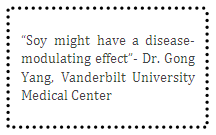
Soy Consumption and Cancer Prevention


Eating soy could both prevent and alter the disease course of lung cancer in women.


One component of cancer recovery is lifestyle- and that includes diet. According to a study conducted in China, women that consume soy before a lung cancer diagnosis may be positively affected. This longitudinal study observed increased mortality rates (81%) among the women in the 10th percentile of soy consumption compared to their peers. As the 50th percentile had the lowest mortality rates, the 90th percentile of soy consumption, in contrast, had an 11 % increase in mortality rates. This suggests a moderate consumption of plant derived soy foods is optimal for mortality prevention in women.


This experiment controlled for stages of cancer development and tumor size. It also included an sum of individual’s daily soy intake from soy foods such as tofu, soy sprouts, fresh green soy beans, soy milk, and other soy products. A mean intake of 18.0 g/day for soy food and 8.8 g/day for soy protein was concluded. The average age of when women’s cancer diagnosis occurred was 66.3 y/o. The author notes that soy intake had not correlation with patient characteristics such as age at diagnosis, smoking, obesity, family history of lung cancer, tumor stage, treatment regimens, or time between baseline dietary assessment and disease diagnosis.

What makes plant-derived soy to be beneficial is the estrogen content in soy foods. On a molecular level, estrogen is produced naturally by the female body as a sex hormone. When plant-derived soy is consumed, it acts as a selective binding agent to this. Consequently, this research suggests that eating soy could both prevent lung cancer among women along with alter the disease course during treatment.

For more information on this study please visit:

J Clin Oncol. Published online March 25, 2013. Abstract

Sep 27, 2013

Lifestyle Tips to Prevent Cancer

October is Cancer Awareness Month. Below is a list of ways you can prevent cancer and/or prevent a reoccurrence of cancer.  Twelve million cancer survivors are at risk of developing a reoccurrence or secondary cancers.  

Looking at the research I listed some of the lifestyle changes that are the most effective in preventing cancer.   


1).  Do Not Smoke.  Two thirds of the individuals diagnosed with cancer still smoke.  Smoking increases one’s risk for secondary cancers, stroke, heart disease, osteoporosis, emphysema and COPD.

2). Stay away from second hand smoke.  Second hand smoke can be worse than smoking.  Even being around smokers outside increases one’s risk for cancer.  Lung cancer has increased over the years with non smokers.

3).  Exercise one hour five times a week.  Exercise will increase your energy, physical strength, lift your mood and lower your stress levels.  Exercise will also prevent, breast, colon, prostate cancers.

4). Avoid weight gain. Excess weight increases one’s risk for breast, colon and prostate cancers,  diabetes and heart disease.

5).  Eat a healthy diet. Organic is preferred.  One should eat five to twelve servings of vegetables a day and two to three fruits. Vegetable and fruits are where we get our vitamins and minerals. Protein with each meal is our energy source.

6).  Drink alcohol in moderation, if at all.  As little as one drink a day can increase a woman’s risk for breast cancer by thirty percent. Moderation means drinking two or three days a week, one to two glasses of alcohol.

7).  Stay connected to family, friends and other cancer survivors if you have had cancer. Having a good social support can improve one’s quality of life and reduce stress, depression and fatigue.

8). Limit your intake of grilled, broiled and fried foods. These methods of cooking increase your risk for breast, colon and prostate cancers.

9). Get screening tests and go to regular checkups.  This means:

  • Doing a regular monthly breast exam.
  • Getting a yearly or biyearly mammogram if always normal.
  • Getting a colonoscopy after the age of fifty.
  • Getting a prostate exam at the age of fifty.

It is always best to prevent cancer rather than to treat. We all need to take charge of our own health. 
Dr. Deborah Wiancek, a naturopathic physician works at the Riverwalk Natural Health Clinic & Natural Pharmacy.  Any questions please e-mail Wiancek@healthref.com or call 970-926-7606.  For more info check out her website at www.healthref.com or blog http://riverwalknaturalhealth.blogspot.com or twitter https://twitter.com/riverwalkhealth.