Translate

Aug 26, 2019

12 WAYS TO DODGE DEMENTIA

Did you know that your brain starts to deteriorate 30 to 50 years before
you have any symptoms? Losing your memory or developing brain fog
in your 40s, 50s, 60s, 70s, or even 80s is not normal—it’s a sign of
trouble. By adopting these brain healthy strategies, you can outsmart
your genes, put the brakes on aging, and even reverse the aging process
so that you look and feel younger in a short period of time!

1. Drink water. Your brain is 80% water, so anything that dehydrates
it (such as too much caffeine or alcohol) should be avoided. How much
water should you drink? ½ your body weight in ounces is best.
Example: if you weigh 150 pounds, drink 75 ounces of water each day.

2. Get enough sleep – at least 7-8 hours per night.

3. Move your body! Studies show that exercise will help
prevent Alzheimer’s and boost your energy, mood, metabolism, and
the ability to create new brain cells. Exercise truly is the closest thing
to a happiness pill that you will ever find!

4. Protect yourself from brain injuries… period. Wear a helmet when biking & skiing.

5. Embrace your sense of meaning and purpose, and keep a gratitude journal.

6. Eat breakfast and keep your blood sugar balanced so that you can make great decisions about how to care for your brain and body. Protein with each meal and 5-12 veggies a day.

7. Maintain a healthy weight. Studies show that as your weight goes up, the size and function of your brain goes down. Don’t know your BMI?

8. Free yourself from toxins:
 Limited alcohol: no more than 2-4 glasses a week.
 If you smoke, quit!
 Eat lots of antioxidants such as Vit A, C, D, E & Selenium and super-nutrient Organic foods to gain protection from brain-damaging free radicals. All these antioxidants are in Dr. Wiancek Optimal Health multivitamin.

9. Become a lifelong learner. In a way, your brain is like a muscle—the more you use it, the stronger it gets!

10. Practice effective stress/anxiety management techniques, such as meditation, ANT therapy and online brain games that are designed to boost emotional control and stress resilience.

11. Know your important health numbers Blood pressure, Cholesterol, C Reactive Protein, Homecyteine and:

 Take a good multiple vitamin/mineral supplement Dr. Wiancek's  Optimal Health Multiple contains all the antioxidants, B vitamins and vitamin D.  You can pick this up at the Riverwalk Natural Health Clinic Pharmacy or you can order by e-mail wiancek@healthref.com.
 Take an Lead & Mercury Free Omega-3 supplement
 Optimize your Vitamin D level
     Many people are deficient in methylated B vitamins which are in Dr. Wiancek's Optimal Multiple.

12. Learn about the health of your brain and continuously strive to improve it by making an appointment today with Dr Wiancek at the Riverwalk Natural Health Clinic. 

Jun 17, 2019

The Inequality in Treatment of Women with Heart Disease


One in four women will get heart disease in the US.  Heart disease is increasing in women ages 35 to 55 years old.  Before menopause one in seven women will have a heart attack.  After menopause one in three women will have a heart attack. Only twenty four percent of the heart disease studies are focused on women. According to prominent cardiologists Reynolds and Walsh, cardiology assessment in women shows an inequality in research, an inequality in diagnosis and an inequality in treatment.

Signs and symptoms of heart disease are very different for women.  This is why so many women get misdiagnosed when it comes to heart disease. In fact, many women do not have chest pain with a heart disease.  The most common symptoms of heart disease in women are fatigue, depression and insomnia.  These same symptoms can also be related to menopause, anemia, thyroid issues, other hormonal issues etc.  Therefore, when treating women and heart disease one should look at the broader picture.

Symptoms related to heart disease include fatigue, restlessness, insomnia, anxiety, mood issues, weakness, fainting, persistent barking cough, an abrupt change in how they feel, atypical pain, discomfort, pressure, heaviness, burning, tightness, fullness in the chest, discomfort in left or right arm, upper back, shoulder, neck, throat, jaw or stomach or bluish color or numbness of the lips.  Forty percent of the women have no chest pain at all.

One month before a heart attack symptoms one can have include unusual fatigue, sleep disturbance, shortness of breath, indigestion, anxiety, heart racing and arms feeling weak and heavy.  As women we need to take control of our health by not ignoring our symptoms. If your doctor states that it is all in your head, go to another doctor.  As a naturopathic doctor I look at the boarder picture related to one’s symptoms since these symptoms can be related to so many diseases.  Heart disease is preventable through diet, lifestyle changes and stress reduction.  Catching and treating your symptoms early can prevent a major heart attack.

Is cholesterol directly related to heart disease? No, according to systematic research review by Ravnskov, Diamond, and Hama, cholesterol is not directly related to heart disease.  Many people with high cholesterol have no other signs of heart disease.  Statins are commonly used to lower cholesterol.  In fact, lowering cholesterol with statins can increase a women’s risk for cancer, hormone deficiency and dementia.  The British Medical Journal stated that women taking statins for more than 10 years had a 83% increase risk of invasive ductal breast carcinoma and a 97% increase in invasive lobular breast carcinoma. Statins have also been linked to depression, muscle pain and dementia in women. We need cholesterol to make our hormones.  As cholesterol decreases our body is also unable to make hormones such as progesterone, estrogen and testosterone.  Statins also can be a reason many people are on hormone replacement because lowering cholesterol with statins depletes hormones. Statins are the number one selling drugs.  Lowering cholesterol does not reduce a women’s risk for heart disease, and for this reason statins show no benefit for women and heart disease.  If your cholesterol is high you need to go to a doctor who can assess your diet, lifestyle and stress levels.  It is about us taking responsibility for our own health.

Also, aspirin is no longer recommend as a preventive therapy to prevent heart attacks. I have not recommended aspirin for the past twenty years because of the risk of bleeding issues and tinnitus related to aspirin.  I do not recommend taking any aspirin or NSAIDS such as Aleve, Ipuphron, Tylenol.  Taking NSAIDS for two weeks can increase your risk for a stroke and a heart attack by fifty percent.  Just because a medication is over the counter does not mean that it is safe. All medications have side effects.

Bio-identical hormones do not prevent heart disease.  Heart disease rates are still increasing in women even though they are taking bio-identical hormones. Depression and fatigue are directly related to low serotonin levels which is related to heart disease in women. So do not ignore your symptoms.  If you do not feel well, you need to go to your doctor.

Again, the symptoms of heart disease in women are insomnia, fatigue and depression.  If you have any of these symptoms see a doctor for an evaluation to get to the cause of your health issue.  Lowering cholesterol increases one’s risk of breast cancer and increases one’s risk for dementia.  We need cholesterol to make our hormones.  As cholesterol decreases your body is also unable to make hormones has as estradiol, progesterone and testosterone.  Heart disease is preventable through diet, lifestyle changes and stress reduction. As women we need to take charge of our health.

Dr Deborah Wiancek is a naturopathic doctor at the Riverwalk Natural Health Clinic & Pharmacy for the past twenty-two years.  She has a family practice focusing on the cause of one’s health issue rather than just treating the symptoms. For any questions or an appointment at 970-926-7606 or wiancek@healthref.com.

May 30, 2019

Mediterranean Quinoa

Mediterranean Quinoa

Inspired by a recipe from a Bastyr student named David St. Martin, this whole grain salad has it all. Amino acid-rich quinoa combines with pine nuts and feta to provide protein. The raw herbs add the digestive elements to the dish. This makes a stupendous meal combined with Mediterranean, Middle Eastern Falafel or Caribbean Lime Halibut. Cooked millet, rice or other grain can be substituted for quinoa. 
bowl of Mediterranean Inspired Quinoa

1 cup quinoa
1 ¾ cups water
½ tsp sea salt
¼ cup toasted pine nuts
¼ cup olive oil
¼ cup lemon juice
3 tablespoons chopped fresh mint
3 tablespoons chopped fresh Italian parsley
2 scallions 

Ingredients

cup
quinoa
1 3⁄4 cup
water
1⁄2 tbsp
salt
1⁄4 cup
Toasted Pine Nuts
1⁄4 cup
olive oil
1⁄4 cup
lemon juice
tbsp
Fresh Mint
tbsp
Chopped Fresh Italian Parsley
 
scallions
1⁄4 cup
currants
1⁄3 cup
crumbled feta cheese

Instructions

Wash, rinse and drain quinoa. Place in a 2-quart pot, add water and salt, bring to a boil, lower heat, and simmer with lid on until all water is absorbed (15 to 20 minutes). Don’t stir the grain while it’s cooking. Test for doneness by tilting the pan to one side, making sure all of the water has been absorbed. Remove lid and let rest for 5 to 10 minutes.
Dry-toast pine nuts in skillet or 300-degree F oven until they begin to chance color and give off aroma, about 10 minutes.
Combine olive oil, lemon juice, mint and parsley in a large bowl. Add scallions, currants, feta cheese, and toasted pine nuts and toss. Add cooked warm quinoa a little at a time. Toss well. Serve at room temperature. 

Beet Carpaccio with Dark Greens Salad

Beet Carpaccio with Dark Greens Salad Recipe by Fernanda Larson, MS, CN Bastyr

Beet Carpaccio with Dark Greens Salad on plate

Ingredients

bunch
Red beets (with greens)
tsp
extra virgin olive oil
tbsp
extra virgin olive oil (for dressing)
tbsp
red wine vinegar
tsp
chopped fresh tarragon
tsp
honey
tsp
salt
1⁄4 tsp
black pepper
1⁄4 cup
chopped walnuts

Instructions

Separate beets from greens. Scrub beets well and slice thinly on a mandolin. Arrange on a platter, single layer. Wash the greens, spin dry and chop into bite size pieces.
In a shallow pan, heat the olive oil and sauté the greens until wilted. Arrange on top of the beet slices.
In a small bowl, whisk together olive oil, vinegar, honey, tarragon, salt, and freshly cracked black pepper.
In a small frying pan, dry toast the chopped walnuts until fragrant. Gently spoon the dressing over the beets and greens, sprinkle the toasted walnuts over and serve.

Mediterranean Red Lentil Soup with Herbs

A Mediterranean-inspired soup dish full of whole foods!
Red lentil soup bowl with herbs and spoon

Ingredients

tbsp
extra virgin olive oil
 
onion
 
medium carrots
 
ribs celery with leaves, chopped
 
minced garlic cloves
 
fresh bay leaves
cup
dried red lentils, rinsed
cup
water
 
14 oz. bottle crushed tomatoes
 
14 oz. bottle tomato sauce
3⁄4 tsp
sea salt
1⁄2 tsp
black pepper, freshly ground
1⁄2 cup
fresh flat leaf Italian parsley, chopped
1⁄2 cup
fresh basil, chopped
 
bunch spinach, chopped 

Instructions

In a 4-quart soup pot, heat olive oil over medium-high heat.  Add onions, carrots and celery and sauté until onion is soft and translucent, about 5-7 minutes.  Add garlic and sauté for 1 minute.  Add bay leaves, red lentils, water, tomatoes, tomato sauce, salt and pepper and bring to a boil. Turn down to a simmer over medium heat and cook until lentils are tender, about 20-25 minutes. Add more water if needed. Remove bay leaves. Add spinach and simmer another few minutes until just wilted. Add parsley and basil, and stir through. Taste and adjust salt and pepper. Drizzle a bit of extra virgin olive oil on top when served, if desired.

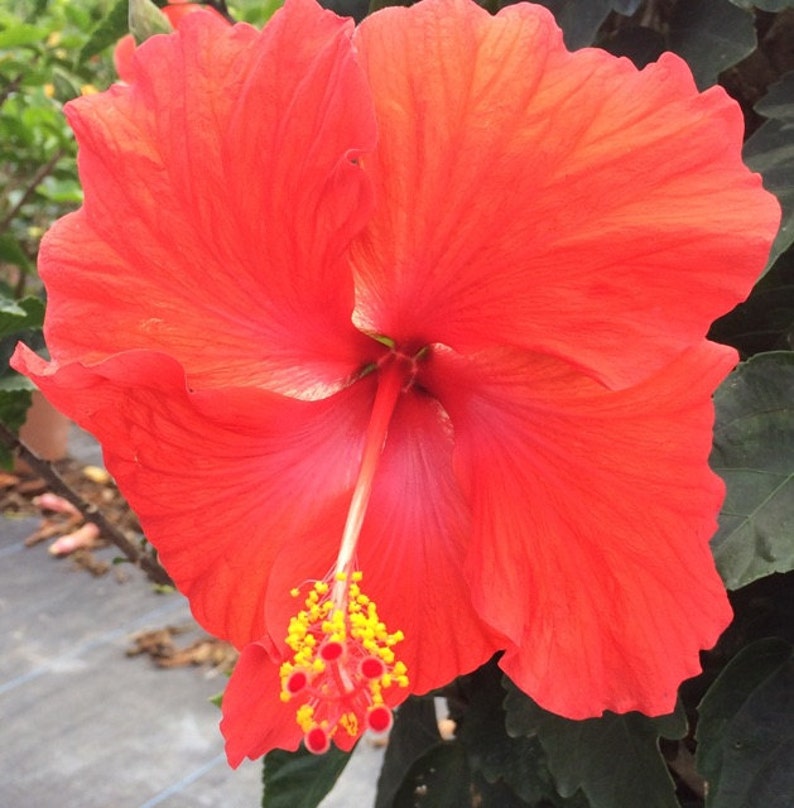
Heart Healthy Hibiscus Soothes a Bitter Heart


image 0

Hibiscus tea has gained popularity as a delightfully refreshing beverage with a tart, berry-like flavor, but it might surprise you to find out that it doesn’t come from a berry or fruit at all.  Nor does it even come from the showy flower of the hibiscus plant.
The dark red tea actually comes from the calyx of the Hibiscus sabdariffa plant (the little cup of modified leaves that hold the flower). I understand if the thought of drinking calyx tea doesn’t ignite passion in your heart, but maybe it should because hibiscus tea may be just what your heart needs.
Hibiscus tea is very rich in a class of compounds known as anthocyanins (responsible for its dark red color) that are commonly found in dark blue and red fruits/berries.  On top of being very antioxidant, the anthocyanins in hibiscus have also demonstrated ACE inhibiting activity – just like many drugs people take for hypertension.  In fact, in a 2010 study, patients who took an extract which contained 250 mg of hibiscus anthocyanins per day saw a greater decrease in blood pressure than patients who took 10 mg of lisinopril (an ACE inhibitor) and with fewer side-effects.(1)
This study also showed that the hibiscus extract had a mild diuretic effect, but that it maintained potassium levels which is very important for individuals being treated with hypertension. Patients being treated for hypertension often take a diuretic and ACE inhibitor combined, but here we have a plant medicine that offers both in a safe package.
Hibiscus is also rich in various polyphenols, in addition to the anthocyanins, and all of these compounds combined may play a role in protecting our blood vessels from damage caused by excessive blood sugar or blood lipids – often features in diabetes and metabolic syndrome that can lead to cardiovascular disease.(2)  Regular consumption of hibiscus tea could help to prevent complications associated with these conditions such as poor peripheral circulation, retinopathy, atherosclerosis, and hypertension.
Taking an extract standardized to anythocyanins can be an easy way to take hibiscus, but why pass up a chance to enjoy the delicious tea?  Another study showed that drinking an 8 oz cup of hibiscus tea (one tea bag steeped for six minutes) three times a day, was also effective at lowering blood pressure in patients with pre- or mild hypertension.(3)
Of course, you should always discuss using herbs and dietary supplements with your doctor to make sure they are right for you.
-Article written by Kaleb Lund, PhD, Core Faculty Member in the School of Naturopathic Medicine and Department of Botanical Medicine and Assistant Research Scientist for the Bastyr University Research Institute.

(1) Herrera-Arellano, A., Miranda-Sanchez, J., et al. (2007) “Clinical effects produced by a standardized herbal medicinal product of Hibiscus sabdariffa on patients with hypertension. A randomized, double-blind, Linisopril-controlled clinical trial.” Planta Medica. 73:6-12
(2) McKay, D.L., Chen, C-Y., et al. (2010) “Hibiscus sabdariffa L. tea (tisane) lowers blood pressure in prehypertensive and mildly hypertensive adults.” The Journal of Nutrition. 140(2):298-303
(3) Joven, J., March, I., et al. (2014) “Hibiscus sabdariffa extract lowers blood pressure and improves endothelial dysfunction.” Molecular Nutrition & Food Research. 58(6):1374-1378

HAPPY TICK-FREE SUMMER


Memorial Day Weekend has come and gone, and that means one thing – it’s officially summer! And while the warmer weather comes with exciting outdoor adventures and great vitamin-D access, it also awakens many creatures – including the biting ones.
In the catalog of annoying bugs, ticks hold a special place, as they transmit a wide range of diseases – including bacterial, viral and parasitic ones. Ticks are parasitic mites of the family Ixodidae and, while there are over 800 known species, only 15 transmit diseases. Of all tick-transmitted diseases, Lyme (Lyme borreliosis) is the most dreaded. Currently the most frequently occurring vector-borne disease in the US, it is transmitted by the blacklegged deer tick (Ixodes scapularis and I. pacificus).
In the US, around 300,000 people come down with Lyme disease each year – a far cry from the 30,000–mark reported by the Centers for Disease Control and Prevention (CDC) before 2015. 96 percent of these cases are reported from 14 states dispersed around the Upper Midwest, Mid-Atlantic and the Northeast, although infection reports have been country-wide.
Early in their life cycle, blacklegged deer ticks don’t carry any pathogens. However, they contract the Lyme bacterium (Borrelia burgdorferi) when feeding on the blood of an infected host. These infected ticks, which serve as a reproduction site for the bacteria, then transmit B. burgdorferi via saliva to humans during a blood meal. Blacklegged deer ticks can transmit Lyme disease either as nymphs or adults, although the nymphal transmissions are more prominent.
It was previously believed that for a successful transmission to occur, ticks needed to be attached to the skin for 36-48 hours, but according to a recent study published in the International Journal of General Medicine, Lyme disease can be transmitted in as little as 16 hours, with the average transmission time of 24 hours.
Lyme disease is multi-systemic in nature, capable of affecting the skeletal, cardiovascular and central nervous systems. Known as the great mimicker, it can present with rheumatoid arthritis, fibromyalgia, depression, attention deficit hyperactivity disorder, multiple sclerosis, chronic fatigue syndrome, cardiac manifestations, encephalitis, and mental illness, to name some of the many associations. Common ocular symptoms and signs include conjunctivitis, keratitis, uveitis, and retinitis. The most diagnostic symptom, however, is erythema migrans a.k.a., the bulls-eye rash.
Lyme disease has no “cure”, per se, although some medications, botanicals and/or nutrients may prove ameliorative. Early detection and treatment is also critical to prevent multi-system complications that can arise later in life. This is why prevention is key when it comes to ticks and Lyme disease.
Repel ticks with essential oils
The CDC recommends Permethrin, DEET and picaridin as inorganic solutions to the tick problem, suggesting the treatment of clothes, socks and boots prior to enjoying outdoor activities. However, research has shown that certain essential oils (alone or as a mixture) can be just as efficacious in tick prevention and control.
Essential oils including rosemary, lemongrass, cedar wood, peppermint, geraniol, citronella and clove have all been found to possess strong acaricidal properties that make them an effective organic option in tick control.
In a 2013 study published in the Journal of Medical Entomology, Eco-Exempt IC2 (an organic insecticide with rosemary oil (10%) and peppermint oil (2%) as its active ingredients) was used to control various stages of I. scapularis in southern Maine. The black-legged deer ticks were endemic in the test area prior to the acaricide application, during both nymphal and adult season peaks. In both cases, the population of I. scapularis in the treated area was reduced to zero and the effect lasted for 6 months post-application. In another study examining the efficacy of rosemary essential oil, a larval mortality of >85% was reported at 10-20% concentrations.
Cedar wood oil has also been widely reported as a potent acaricide. In a study published in the Journal of Economic Entomology, Incense cedar heartwood (Calocedrus decurrens) oil was found to be highly toxic to nymphal I. scapularis and controlled its population significantly in the target area. Another study published in Environmental Entomology reported that  red cedar oil resulted in 100% mortality rate in nymphal I. scapularis at a dosage of 6.3 mg/ml.
Clove bud and Citronella oils are also quite effective. One 2017 study reported an 83% repelling strength for clove bud when used against Dermacentor reticulatus ticks at 3% concentration. Citronella was reported to have an even higher repellency of 91% at a concentration of 1.5 percent. Application of the oils may be topical or sprayed in the environment.
Other helpful tips:
  • Avoid natural tick habitats e.g., leaf litter and thick vegetation.
  • Stick to the middle of trails when you go hiking.
  • Take a quick shower and perform a full body check after spending time in the wood.
  • When discovered, remove ticks quickly with forceps.
  • Treat dogs and other pets with tick-repelling products.
  • Kill ticks by drying clothes in a high-heat dryer for 10-15 minutes after potential exposure.
Happy Summer!