Translate

Feb 19, 2014

Black Bean and Quinoa Veggie Burgers


blackbeanquinoaburgers2


Patties:
 

½ cup dry quinoa
1 tsp olive oil
1/2 red onion, chopped
3 cloves garlic, minced
1/2 tsp Kosher salt, divided
1 (15 oz) can black beans, drained and rinsed
2 Tbsp tomato paste
1 large egg
2/3 cup frozen corn
1/2 cup cilantro, chopped
1 chipotle in adobo, minced
2 tsp ground cumin
1/2 cup rolled oats
1/4 cup oat flour


Yogurt Sauce:
½ cup plain fat-free Greek yogurt
1 Tbsp honey
1 Tbsp Dijon mustard


Directions:

Place the quinoa in a small saucepan with 1 cup of water. Set the saucepan over medium-high heat and bring to a boil. Reduce heat to low, cover the pan, and cook 10-15 minutes until the water is absorbed and quinoa is cooked. Remove from heat. Note: this step can be done ahead of time.

Heat the oil in a small pan over medium heat and add the onion and garlic. Add 1/4 teaspoon salt and sauté until onions are softened, 5-6 minutes. Place the mixture into a large bowl. Add black beans to the bowl and using a potato masher or fork, mash together until a pasty mixture forms.
Stir in the tomato paste, egg, corn, cilantro, chipotles, cumin and remaining 1/4 teaspoon salt. Stir in the cooked quinoa, oats, and oat flour until well mixed. Form the mixture into 6 equal patties, compacting them well with your hands as you form them. Place the patties on a baking sheet, cover them with plastic wrap and refrigerate for at least a few hours or overnight.

To make the yogurt sauce, stir the yogurt, honey and mustard together in a small bowl.  When ready to eat, preheat the oven to 400 F or heat a griddle to medium-high heat. If baking, spray a baking sheet with nonstick cooking spray and place the patties on the sheet cook 10-12 minutes until the patties are golden brown and crispy. Carefully flip the burgers over and cook another 10 minutes. If using a griddle, heat 4-6 minutes per side or until slightly golden. Serve patties with the yogurt sauce.


Feb 14, 2014

10 Anti-Inflammatory Foods that Fight Pain

Humans have been seeking relief from pain for centuries—long before there were pills to pop. These foods are still around today, and they can really help manage pain.

Oranges: These sweet citrus fruits are considered anti-inflammatory and are recommended in anti-arthritis diets. Oranges contain beta-cryptoxanthin, a phytochemical that has been shown to decrease the development of inflammatory joint conditions. Some other foods that have beta-cryptoxanthin are apricots, plums, watermelons, peaches and papaya.

Red Grapes: Red Grapes (and, to a lesser extent, green grapes) have resveratrol in their skins. Resveratrol inhibits the COX enzyme, which is what NSAIDs do. Resveratrol is also found in mulberries.

Seeds and Nuts: Sunflower seeds, sesame seeds, peanuts and hazelnuts contain tryptophan. This chemical helps reduce pain and sensitivity.

Beans and Whole Grains: Beans, whole grains and lentils also contain tryptophan. A good pain-fighting dish would be beans over brown rice with some nuts on the side.

Fatty Fish: Fish like salmon and mackerel contain large amounts of essential fatty acids (omega-3s), which are anti-inflammatory.

Cherries: Recent studies have shown the anti-inflammatory properties of cherries. Cherry juice works well too.

Blackberries, Strawberries, and Blueberries: These berries have antioxidants, which help prevent cell damage.  This can inhibit or prevent painful conditions like arthritis.  Other studies have also found these berries to be anti-inflammatory as well.

Chickweed: You may not recognize this as a food, but it is an edible plant that you can probably find in your yard. Chickweed helps reduce swelling and helps ease internal pain. It can be eaten as a salad green or brewed into tea.

Ginger: Ginger is a tasty anti-inflammatory that reduces those pesky prostaglandins. It seems to work especially well for muscular pain.

Celery Seeds: The anti- inflammatory chemical in celery and its seeds is apigenin. Celery seed is recommended for managing gout pain and preventing attacks of gout.

Feb 13, 2014

Vitamin D Levels Linked to Multiple Sclerosis Progression

New research links Vitamin D to the progression of Multiple sclerosis (MS), a chronic disorder that affects the brain and spinal cord.  MS is a condition in which the immune system attacks components of the body as if they are foreign. Previous studies have found multiple sclerosis rates to be lower in areas with greater sunlight and higher consumption of vitamin D rich fish.
In a recent study, the vitamin D levels of MS patients involved in an assessment of early interferon beta-1b treatment were evaluated. Vitamin D levels were taken before the beginning of the study and then after six, twelve, and twenty-four months. Various outcome measures, including MS relapses and disability were analyzed.
It was found that MS progressed more slowly in participants with higher vitamin D blood levels, and increases in vitamin D levels by 50 nmol/L was linked to a 57 percent  reduced risk of developing new active brain lesions as well as 57 percent  lower risk of relapse.  Furthermore, higher vitamin D levels were associated with 0.41 percent less yearly brain volume loss and a 25 percent reduced yearly increase in T2 lesion volume.

Feb 12, 2014

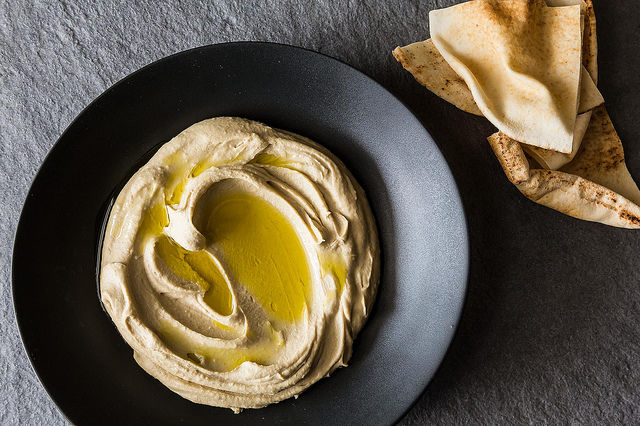
Basic Hummus Recipe

Yotam Ottolenghi & Sami Tamimi's Basic Hummus
This recipe is simple and the results are perfect, but here's the real coup: Most from-scratch hummus recipes involve simmering the chickpeas for 1 1/2 to 2 hours. Ottolenghi and Tamimi's are done in 20 to 40 minutes. How? See step 2. Briefly cooking the soaked chickpeas directly with baking soda scruffs up the skins and allows them to cook much faster and puree smoother. (Without having to peel the chickpeas by hand.)

Makes 6 servings
  • 1 1/4cup dried chickpeas
  • 1teaspoon baking soda
  • 6 1/2cups water
  • 1 cup plus 2 tablespoons tahini (light roast)
  • 4tablespoons freshly squeezed lemon juice
  • 4 cloves garlic, crushed
  • 6 1/2tablespoons ice cold water
  • Salt
  • Good quality olive oil, to serve (optional)
  1. The night before, put the chickpeas in a large bowl and cover them with cold water at least twice their volume. Leave to soak overnight.
  2. The next day, drain the chickpeas. Place a medium saucepan over high heat and add the drained chickpeas and baking soda. Cook for about three minutes, stirring constantly. Add the water and bring to a boil. Cook, skimming off any foam and any skins that float to the surface. The chickpeas will need to cook for 20 to 40 minutes, depending on the type and freshness, sometimes even longer. Once done, they should be very tender, breaking up easily when pressed between your thumb and finger, almost but not quite mushy.
  3. Drain the chickpeas. You should have roughly 3 2/3 cups now. Place the chickpeas in a food processor and process until you get a stiff paste. Then, with the machine sill running, add the tahini paste, lemon juice, garlic, and 1 1/2 teaspoons salt. Finally, slowly drizzle in the ice water and allow it to mix for about five minutes, until you get a very smooth and creamy paste.
  4. Transfer the hummus to a bowl, cover the surface with plastic wrap, and let it rest for at least 30 minutes. If not using straightaway, refrigerate until needed. Make sure to take it out of the fridge at least 30 minutes before serving. Optionally, to serve, top with a layer of good quality olive oil. This hummus will keep in the refrigerator for up to three days.
Recipe adapted slightly from Jerusalem (Ten Speed Press, 2013) (less) - Genius Recipes

Feb 11, 2014

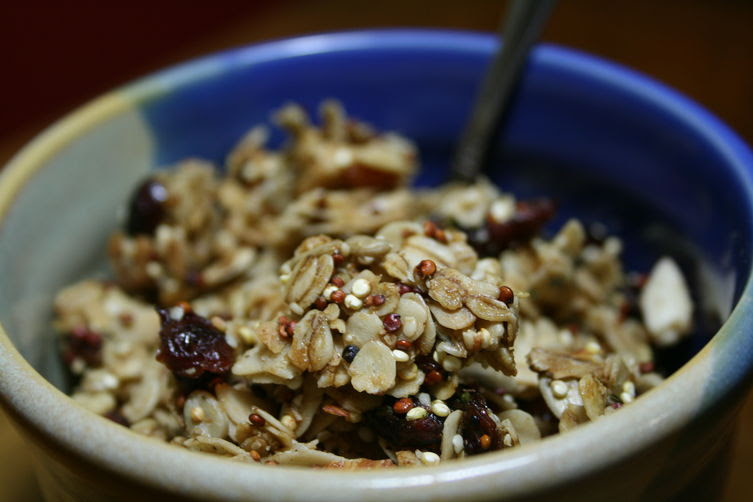
Maple Quinoa Granola

Maple Quinoa Granola


Makes 5 to 6 cups
  • 2cups whole rolled oats
  • 1/3cup pre-rinsed quinoa
  • 1/2cup raw walnuts, in pieces or coarsely chopped
  • 1/3cup raw almonds, coarsely chopped
  • 1/3cup raw sunflower seeds
  • 1/3cup unsweetened coconut flakes (raw)
  • 1/4cup white raisins
  • 1/4cup dried sweetened cranberries
  • 3tablespoons split hemp seeds (optional)
  • 1/3cup coconut oil
  • 1/3cup grade B maple syrup
  • 1dash cinnamon
  • 1dash nutmeg
  1. Preheat your oven to 225° F.
  2. Mix all dry ingredients (excluding cinnamon and nutmeg) in a great big mixing bowl.
  3. In a small saucepan over really low heat (or just in a bowl if your coconut oil is liquid), combine oil, syrup, and a dash each of the spices. You only need to get it up to a temperature that melts the coconut oil, then turn it off immediately. Pour your syrup/oil over the mixing bowl, then stir it all up until you don't see any more dry oats. Mix it up good.
  4. Spread the mix onto a cookie sheet lined with parchment paper. Flatten it out so it's even; it should take up the whole sheet. Bake at 225° F for 60 minutes.
  5. Let cool completely. When cooled, lift the ends of the parchment and let it crumble to the center. I leave the big chunks big; they'll break up as you pour everything into your jar. You can also just grab them and eat them.
  6. Because of the coconut oil here, this needs to be kept in an airtight container in the fridge, or safely below 70°, otherwise it risks losing its crispety crunchety.

Feb 7, 2014

Banana Walnut Quinoa Muffins Gluten Free

Banana Walnut Quinoa Muffin Cups

quinoa muffin cups
The name alone is a mouthful, huh?  Wait until you taste one!  This is a delightfully healthy, moist, and hearty muffin for breakfast or a snack.  Or serve one hot upside down for dessert, topped with hot blueberry compote and/or a dollop of coconut yogurt (plain).   These cups have a similar texture to baked rice pudding.
  • 3 cups cooked quinoa (typically about one cup dry – cooked), room temp or cold (Any variety of quinoa will work, though I recommend a 50:50 mix of red and white for hearty flavor.  All white will be a lighter flavor.)
  • 3 eggs, extra-large, at room temperature
  • 2 cups mashed, very ripe banana (or 1 cup banana + 1 cup frozen blueberries, as in photo)
  • 1/4 cup ghee (or butter or coconut oil), softened but not melted
  • 2 tsp ground cinnamon
  • 1 Tbsp vanilla extract
  • 1/2 tsp seasalt
  • 20 drops liquid stevia (about 1/2 tsp)
  • 1/4 cup freshly ground  flaxseed (or 50:50 mixture of flax and chia) – measure after grinding
  • 1.5 tsp baking powder
  • 1 cup crushed walnuts
Preheat oven to 350 degrees.  In large mixing bowl, whisk eggs until fluffy.  Add banana, vanilla, ghee, all spices, seasalt, and stevia and whisk until well blended. Sprinkle baking powder and chia/flax over batter and immediately whisk in well.  Add quinoa and walnuts and stir until very well blended.
Scoop 1/4 cup batter into well-greased muffin cups and bake 30-35 minutes (until inserted knife comes out clean and muffin bottoms of golden brown. Allow to cool thoroughly before storing.  I recommend reheating in a toaster oven to recover the delicious contrast of a crisp outside and a custardy interior.

Real Almond Joys

Real Almond Joys


A healthy alternative to a long-standing favorite candy bar or other indulgences.  Make a bit batch for yourself – and your favorite Valentine.  Great for diabetics too!  This is one of my clients’  favorite treats.
  • ¼ cup coconut oil, slightly softened (NOT melted)
  • ½ cup almond butter (or organic peanut butter)
  • ¼ tsp salt (optional – if nut butter is unsalted)
  • ¼ cup raw cacao powder (or unsweetened cocoa powder)
  • 1 tsp real vanilla extract
  • 15-20 drops  stevia extract (herbal sweetener)
  • 1 cup slivered or sliced almonds, coarsely chopped
  • ½ cup dark chocolate chips
  • 1 cup dried coconut
Combine oil, nut butter, cacao powder, salt, stevia, and vanilla extract in a mixing bowl, and mix well. Gently, stir in almonds, chips, and half of the coconut. Form into 1-inch balls. Roll in remaining coconut. Store in a covered container in the refrigerator. Excellent high-energy snack!